This article contains affiliate links. We may earn a commission at no extra cost to you. Full disclosure

Bumble (Asia) Review [2026]
by Bumble Inc • 50M+ worldwide members
Pros
- Women-message-first model creates a safer, less overwhelming environment
- Strong safety features including photo verification and blocking
- Popular in South Korea and Singapore with quality profiles
- Higher average profile quality than most competing apps
Cons
- Limited adoption in Southeast Asian countries
- Smaller user base than Tinder across most Asian markets
- Not specialized for international or cross-cultural dating
Bumble in Asia Review — The Women-First App Across Asian Markets
Bumble carved out its niche by flipping one fundamental rule of online dating: women make the first move. In Western markets, this approach has attracted a user base that skews more educated, more safety-conscious, and more relationship-oriented than the average dating app. But how does this model translate to Asian dating markets, where cultural norms around gender roles and communication differ significantly from the West? After testing Bumble across South Korea, Japan, Thailand, and the Philippines, here is what we found.
Bumble’s Core Difference
The defining feature is simple. When a man and a woman match, only the woman can send the first message, and she has 24 hours to do so. If she does not message, the match expires. Men can extend one match per day, giving the woman an additional 24 hours.
This mechanic has two practical effects. First, it eliminates the barrage of low-effort messages that women receive on platforms like Tinder, which makes the environment more comfortable for female users. Second, it means that every conversation a man enters has been actively initiated by the woman, which typically correlates with higher engagement and response quality.
In Asian markets, this dynamic plays out differently depending on the culture.
Country-by-Country Breakdown
South Korea: Bumble’s strongest Asian market. Korean users, particularly in Seoul, have embraced the app enthusiastically. The user base skews young professional — university-educated, career-oriented, and style-conscious. Profile quality is high, with detailed bios and polished photos. Korean women on Bumble tend to be more internationally minded than the general population, which makes it a reasonable option for Western men living in Korea. The women-first mechanic aligns relatively well with Korea’s dating culture, where directness from women is increasingly accepted among younger generations.
Japan: Adoption is moderate. Japanese Bumble users tend to be in major cities, particularly Tokyo and Osaka. The user base is smaller than Tinder’s in Japan, but profile quality is noticeably higher. The women-first model faces some cultural headwind in Japan, where traditional gender norms can make women hesitant to initiate. However, the women who do use Bumble in Japan have self-selected for comfort with initiation, which tends to mean more confident and internationally minded individuals. Language barriers remain a challenge — most Japanese Bumble users prefer communicating in Japanese.
Thailand: Bumble has a presence in Bangkok but is significantly less popular than Tinder. The user base is smaller and tends to attract a more educated, professional demographic. Thai women on Bumble are less likely to be in the hospitality industry and more likely to be working professionals or students, which may appeal to users seeking a different demographic than what Tinder or ThaiFriendly surfaces. However, the limited pool size is a real constraint.
Philippines: Bumble has the weakest adoption among our tested markets in the Philippines. FilipinoCupid and Tinder dominate the landscape, and the Bumble user base in Manila is small enough that you will exhaust local options relatively quickly.
User Experience and Interface
Bumble’s app is polished and intuitive. Profile creation encourages more detail than Tinder, with prompts that generate conversation-starting responses displayed on profiles.
In-app video chat is a significant advantage. Bumble allows matched users to initiate video calls within the app, which removes the need to share personal contact information. For international dating, where verifying identity matters more, this built-in video feature is valuable.
Photo verification uses a selfie-based system. Users take real-time photos matching specific poses, which are then reviewed. Verified profiles display a badge, and verification rates on Bumble tend to be higher than on Tinder.
Profile Quality Compared to Competitors
Bumble consistently delivers higher average profile quality than Tinder across all Asian markets we tested. The prompts-based profile system encourages users to share personality, humor, and preferences in ways that a blank bio field does not. Photos tend to be better quality, bios more detailed, and the overall impression more curated.
Compared to niche platforms like ThaiCupid or FilipinoCupid, Bumble profiles provide less structured information. You will not find detailed questionnaires about relationship goals, willingness to relocate, or cultural background. Bumble profiles give you a personality snapshot but not the comprehensive relationship profile that Cupid Media sites offer.
Safety Features
Safety is arguably Bumble’s greatest strength. Beyond the women-first messaging model, the platform offers photo verification, AI-assisted detection of inappropriate messages, easy blocking and reporting, and the option to share your date details with a trusted contact through the app. Bumble has been more aggressive than any other mainstream dating app in addressing harassment and safety concerns.
For women using dating apps in Asia, Bumble provides the most controlled environment of any major platform. The 24-hour message expiry, combined with the requirement that women initiate, gives female users a level of control that no other mainstream app matches.
Pricing
Bumble’s pricing is straightforward with a single premium tier.
| Plan | Monthly | Annual (per month) |
|---|---|---|
| Premium | $16.99 | $10.99 |
Premium unlocks unlimited swipes, the ability to see who has liked you, Travel mode (Bumble’s equivalent of Tinder Passport), and advanced filters. The pricing is competitive — cheaper than Tinder Gold and cheaper per month than most Cupid Media subscriptions.
Is Premium Worth It? Travel mode alone justifies the cost for users planning trips to Asia. The ability to see who has already liked you saves significant time. Advanced filters let you narrow by education, height, and other criteria. For active users, Premium is a reasonable investment. The free tier, however, is also quite functional — the daily swipe limit is generous, and you can match and message without paying.
The International Dating Limitation
Bumble’s fundamental limitation for international dating is the same as Tinder’s: it was not designed for it. Bumble is a local dating app used globally. There is no way to filter for users interested in foreign partners, no translation tools, and no infrastructure for cross-cultural matchmaking.
The women-first mechanic compounds this in some scenarios. If you are a Western man who has set Travel mode to Seoul or Bangkok, you are relying on local women to initiate contact with a foreign profile. This can result in lower match-to-conversation conversion rates compared to platforms where men can message directly.
Verdict
Bumble in Asia is a quality dating app that delivers a safer, more curated experience than Tinder, particularly in South Korea and Japan. The women-first model attracts a higher caliber of user on average, and the safety features are best-in-class among mainstream apps. For expats living in Asian cities who want to date locally, Bumble is an excellent option.
For international dating — connecting with Asian women while living abroad, or seeking cross-cultural relationships specifically — Bumble is less effective than dedicated platforms. The lack of translation, international dating filters, and relationship-intent indicators means you are working without the tools that niche sites provide. The 6.3 rating reflects a strong app with real strengths held back by limited Asia-specific adoption and utility for international matchmaking.
Our Rating: 6.3/10
Frequently Asked Questions
Does the women-first model work well in Asian dating cultures?
It depends on the country. In South Korea and among internationally minded women in Japan, the model works well. Younger, urban, educated women in these markets are comfortable initiating contact. In Thailand and the Philippines, the model faces more cultural friction — traditional gender norms mean some women are less comfortable making the first move. However, the self-selection effect means that women who actively use Bumble in any Asian market have already opted into the initiation model, so conversations tend to be more engaged regardless of country.
Is Bumble or Tinder better for dating in Asia?
Tinder wins on volume — it has more users in virtually every Asian market. Bumble wins on quality — profiles are more detailed, the user base is more educated on average, and safety features are stronger. For South Korea and urban Japan, Bumble is competitive with Tinder and arguably better for serious dating. For Thailand, the Philippines, and Vietnam, Tinder’s much larger user base makes it the stronger generalist choice. For international dating specifically, neither app is ideal — niche platforms like ThaiCupid or FilipinoCupid outperform both.
Does Bumble have a travel mode like Tinder Passport?
Yes. Bumble Premium includes Travel mode, which lets you change your location to any city worldwide. The functionality is essentially identical to Tinder Passport — you can start swiping and matching in an Asian city before you arrive. Travel mode is included in the Premium subscription at $16.99/month or $10.99/month on the annual plan, which is cheaper than Tinder Plus ($14.99/month) for equivalent functionality.
Can I use Bumble for free in Asia?
Yes. Bumble’s free tier is generous compared to most dating apps. You get a daily swipe allowance, the ability to match and message (women still initiate), and access to basic features. The main limitations are the swipe cap, inability to see who has liked you, and no access to Travel mode. For users already physically present in an Asian city, the free tier provides a fully functional dating experience. Premium mainly adds convenience features and is most valuable for the Travel mode if you are planning trips.
Pricing
| Plan | 1 Month | 3 Months | 12 Months |
|---|---|---|---|
| Free | Free | ||
| Premium Best | $16.99 | — | $10.99/mo |
Detailed Ratings
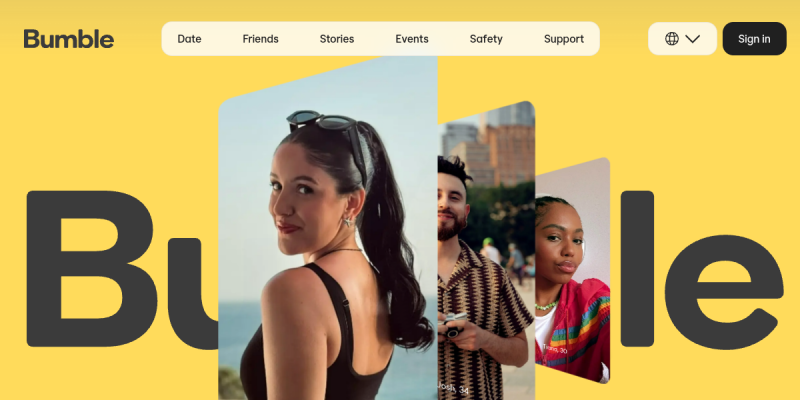
Screenshots
Asian Kisses Editorial Team
We test every dating site with real accounts. Our reviews are based on months of hands-on experience.
Ready to try Bumble (Asia)?
Visit Bumble (Asia)Similar Sites