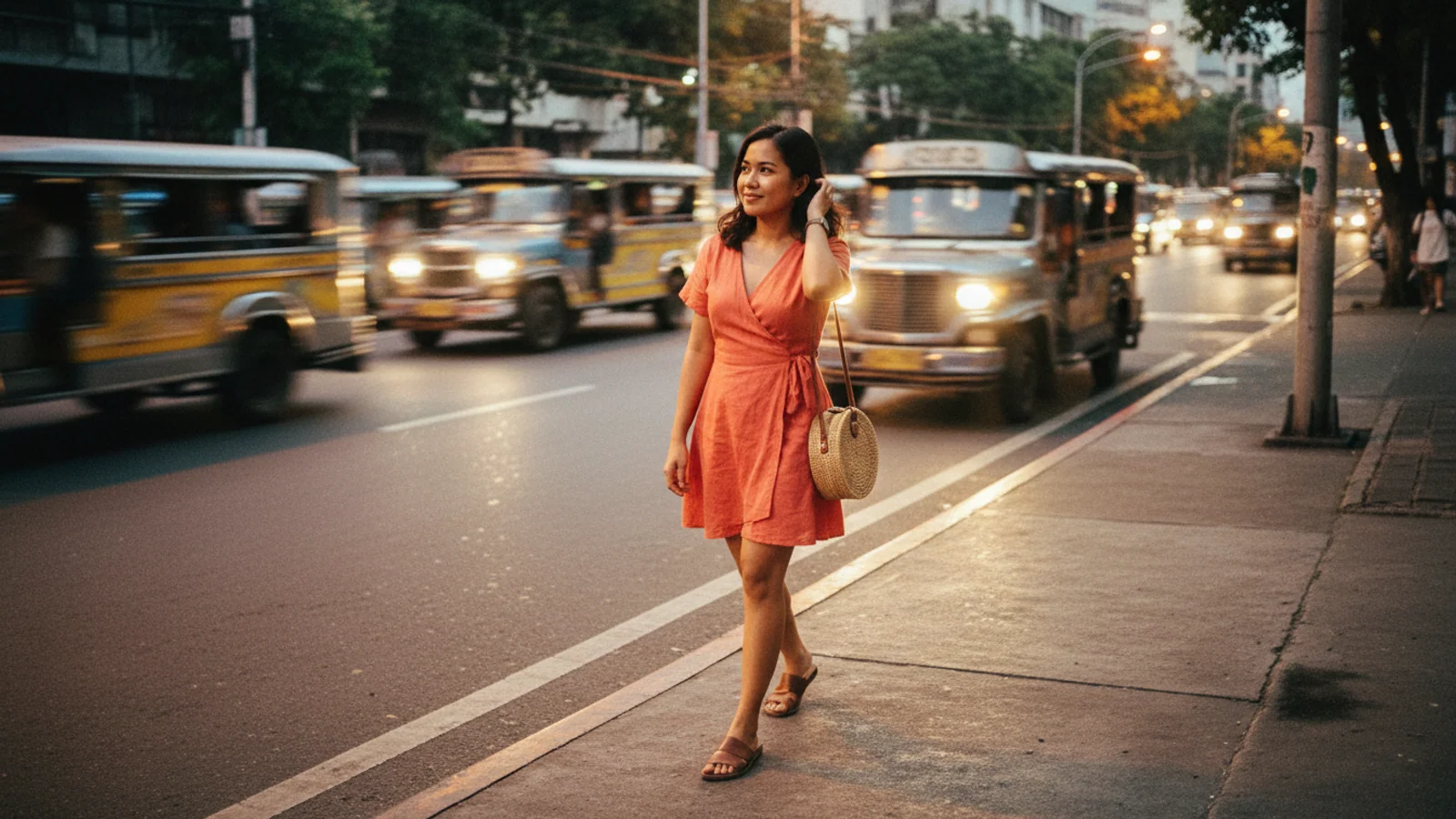
Dating in the Philippines is unlike anywhere else in Asia, and most of what foreigners read online is either travel-blog fluff or content written by people who have never set foot in Quezon City. This guide covers what Filipino dating culture actually looks like, why English fluency changes the dynamic compared with Thailand or Vietnam, how Manila differs from Cebu and Davao, what “pamamanhikan” means when her parents invite you over, and what the K-1 fiancee visa and CFO counseling really involve in 2026.
It is written from a foreigner’s perspective but assumes Filipina women will read it too, because they do. No orientalism, no fairy-tale framing, no recycled cliches about smiling women in tropical sunsets. Just sourced, on-the-ground reality, with links to USCIS, the Commission on Filipinos Overseas, Pew Research, and the U.S. Federal Trade Commission where claims need backing.
If you want the platform side, the companion ranking lives at the best Filipino dating sites for 2026. For the two largest platforms head to head, see FilipinoCupid vs Cherry Blossoms. The review methodology behind those rankings is at our methodology page.
Filipino Dating Culture: Ligaw, Family, and the Catholic Frame
Filipino dating culture sits at the meeting point of three forces: indigenous courtship traditions, more than three hundred years of Spanish Catholic influence, and the American era’s pop-culture imprint. The result is a dating script that looks superficially Western but rests on family-centered values that are not Western at all.
The traditional term for courtship is ligaw (sometimes “panliligaw”). In its classical form, ligaw is the man’s responsibility. He visits the woman at her family home, brings small gifts, helps with chores around the house, and openly states his intentions to her parents. The woman responds slowly. Saying “yes” too quickly is culturally read as low value (“madaling mapasagad”), so even women who are interested signal interest through small gestures rather than direct acceptance.
Urban, college-educated Filipinas in 2026 do not run a full traditional ligaw with house visits and chore-doing. What persists from the tradition is the pattern of slow acceptance, family involvement before a relationship is formalized, and the man being expected to lead courtship steps. A 23-year-old call-center worker in Cebu will still expect you to make the first move, pursue her over weeks rather than days, and want her family to “know about” you well before anything physical happens.
The Catholic frame matters because the Philippines is, by Pew Research’s religious composition data, roughly 79% Catholic, with another 11% in other Christian denominations. Divorce is not legal for non-Muslim Filipinos at the time of writing, although annulment exists and is expensive. Marriage is treated as a serious, often final commitment. Sociologist Belen Medina’s foundational work on The Filipino Family describes the family as the central social unit, with kin obligations that continue across generations and across oceans. That framing shows up in dating: she is not just deciding about you, she is deciding about you in relation to her parents, her siblings, and the children you might have together.
This does not mean every Filipina you meet wants marriage on the first date. The major urban centers have a casual dating scene, especially among professionals in their twenties, and Tinder Philippines and Bumble Philippines are both active markets. But the cultural defaults are weighted heavier toward serious intent than they would be in, say, Bangkok or Ho Chi Minh City.
What “Family Central Role” Actually Looks Like
In practice, family centrality means three concrete things you should expect:
- She will tell her family about you early. Often within the first weeks. Her mother, sisters, and at least one cousin will know your name, your job, and your country before you have met any of them.
- Her family’s opinion has real weight. This is not Hollywood-style “my parents have to approve” theater. If her mother dislikes you, the relationship usually ends, even if she personally likes you.
- Her financial obligations to her family do not stop when she dates you. If she sends money to her parents or siblings every month before meeting you, she will still do it after.
The third point catches a lot of foreigners off guard, so it gets its own section below.
English Fluency and Why It Changes Everything
The Philippines is one of the few Asian countries where dating across cultures does not require either party to learn the other’s language. English is one of the two official languages alongside Filipino, the medium of instruction in most secondary and tertiary education, and the working language of the country’s massive business-process-outsourcing industry. The EF English Proficiency Index consistently ranks the Philippines among the top non-native English-speaking countries in Asia.
The practical consequences for dating are enormous.
Conversations have texture from day one. There are no awkward Google-Translate exchanges where you both type into your phones and hope the romance survives. You can argue, joke, share personal history, and discuss finances without losing nuance. That removes one of the biggest filters that exists in Thai, Vietnamese, or Chinese cross-cultural dating, where language fluency selects heavily for which women you can actually have a deep relationship with.
It also raises the bar. Because she can fully understand you, she can also fully evaluate you. Foreigners who relied on language barrier as a charm amplifier in Bangkok find Philippine dating less forgiving. A boring conversation is boring in clear English; a contradiction in your story is obvious; a clumsy compliment lands flat. Filipinas can read you with the same precision a woman in your home country would.
The other consequence is that the Philippine online dating market is highly verbal. Profiles are longer. First messages are full sentences. Voice and video calls happen earlier than in markets where typing in English is effortful. If you write four-word openers and rely on photos, you will get fewer replies in the Philippines than you would on the equivalent Thai site.
A subtle but important point: regional languages still matter. Tagalog (the basis of Filipino) dominates Luzon. Cebuano (Bisaya) is the first language for most people in the central and southern Philippines. If you are dating someone from Cebu or Davao, learning even ten words of Bisaya signals respect more than learning Tagalog would. The reverse insults nobody, but it does flatten the regional distinctions Filipinos actually feel.
Manila vs Cebu vs Davao vs Angeles City
The Philippines is an archipelago and the dating scene varies more across cities than first-time visitors expect. The big four destinations foreigners encounter have very different characters.
Metro Manila
Metro Manila is the country’s dating capital by volume. Sixteen cities and one municipality make up the metro, and the dating scene clusters in Makati, Bonifacio Global City (BGC), Quezon City, and along the EDSA corridor. The apps are saturated here. Tinder, Bumble, FilipinoCupid, and ChristianFilipina all have their largest user bases in NCR (National Capital Region).
The Manila pace is fast. Professional Filipinas in BGC work BPO night shifts or corporate day jobs and treat dating as a structured activity, not a vacation activity. First dates are coffee at a mall or a restaurant in Salcedo Village. The conversation is direct. The bar for foreign men is the highest in the country because Manila women have the most exposure to foreigners and the most options.
Traffic is the second filter. Anything more than 8 kilometers apart on a weekday turns into a two-hour commitment. Successful Manila daters live near or commute to where they meet. If you are based in Makati and she lives in Quezon City, you will see each other less than you think.
Cebu City
Cebu is the second city and the second-largest dating market. The scene is more relaxed than Manila, the cost of living is lower for foreigners, and the Bisaya-speaking population gives the culture a slightly different texture. Foreigners often describe Cebu women as warmer and less “Westernized” than their Manila counterparts. This is partly true and partly a function of Cebu being smaller, where dating happens over slower, more in-person rhythms.
FilipinoCupid is especially active here. So is ChristianFilipina, because Cebu has a strong Catholic and Protestant church culture. The Mactan-Cebu airport handles direct international flights, which makes Cebu a common landing point for foreigners doing initial in-person meetings after months of online conversation.
Davao City
Davao, on the southern island of Mindanao, is the country’s third major city and has a markedly different feel. It is more conservative, much less touristed, and has stricter local ordinances under the long Duterte family political legacy. Public smoking is banned, alcohol sales are restricted after certain hours in some areas, and curfew enforcement is visible. The dating culture mirrors this conservatism. Casual dating exists but is less visible. Women are more likely to want family involvement early, and the religious mix shifts slightly because Mindanao has a larger Muslim minority than Luzon or the Visayas.
Foreigners who go to Davao tend to be there for serious relationships or because their partner is from there. It is rarely a destination chosen for casual dating.
Angeles City and the Reputation Question
Angeles City in Pampanga deserves a clear-eyed mention because pretending it does not exist would be dishonest. The Balibago district hosts the country’s most concentrated nightlife industry, with bars centered around the former Clark Air Base. The dating scene there is overwhelmingly transactional, with bar workers, ladydrinks, and short-time arrangements that have little to do with the rest of Philippine dating culture.
A Filipina you meet on FilipinoCupid in Quezon City is not part of the Angeles City scene. Conflating the two is one of the most common, most insulting mistakes foreigners make in conversation. If your goal is serious dating, spend your time in Cebu, Manila, or Davao instead.
Common Foreigner Misconceptions
Several foreigner-side misconceptions are common enough to be worth naming directly.
“Filipinas only want a Western passport.” A small minority are openly visa-motivated, and they are easy to spot if you pay attention. The majority of Filipinas on serious platforms are looking for a stable partner who will treat them well. The income gap between many foreign men and many Filipinas creates a power dynamic worth acknowledging honestly, but reducing every relationship to a transaction insults the women and blinds the man to who he is actually dating.
“All Filipinas are submissive.” Filipino culture has a strong matriarchal streak inside the household. Women typically manage the family finances, make significant household decisions, and have real authority. The “submissive” stereotype is mostly a Western projection. Expect a partner who is warm and family-oriented but absolutely capable of standing her ground.
“Age gap doesn’t matter.” Big age gaps are not socially shocking in the Philippines the way they would be in Sweden, but they are also not invisible. Her family will notice. Her friends will comment. The gap that works socially is the one her parents accept. There is no universal rule, but anything past about fifteen years often draws skepticism from her mother.
“Everyone is poor.” The Philippines has a wide income distribution. Many of the women on serious dating platforms are college-educated professionals: nurses, accountants, BPO team leads, teachers. Treating every Filipina as if she comes from poverty is both inaccurate and offensive.
“You can just fly in and meet someone.” Some foreigners can. Most cannot. Filipinas who meet a stranger flying in for a week with no online relationship first are not the demographic most foreigners say they want. Serious connections almost always start online and move offline.
Filipina Family Expectations and Financial Support Norms
This is the section foreigners need to read carefully because it is the area where mismatched expectations cause the most damage.
In the Philippines, adult children supporting their parents and unmarried siblings is a strong cultural norm, not a quirky preference. The Filipino concept of “utang na loob” (debt of gratitude, or inner debt) frames the parent-child relationship as a lifelong reciprocal obligation. Children who can support their parents do, even when the parents are not in poverty. This norm is amplified for daughters and amplified again for daughters in stable relationships.
What this means in practice for a foreigner dating a Filipina:
- She probably sends money home regularly already, even on a modest local salary.
- The amount is usually a function of her income, not need. Twenty percent of her salary is a common rough benchmark.
- If you become her serious partner, her family will, often gently, expect that the support continues and possibly expands.
- “Expand” can mean paying for a younger sibling’s college tuition, helping with a parent’s medical event, or contributing to a house repair.
There is no single correct way to handle this. Some couples agree on a fixed monthly amount that her family receives. Others agree she sends a percentage of household income. Some foreigners refuse to participate at all, which is a defensible choice if stated clearly upfront and not as a surprise three years in.
What does not work is pretending the issue does not exist, or being passive-aggressive about it after she has already mentally relied on the support. Talk about it directly, early, before there are joint finances, and make sure both of you are aligned. This conversation, more than any cultural difference about food or holidays, predicts whether the relationship survives a decade.
The companion to this conversation is meeting her parents.
Pamamanhikan: The Formal Introduction
Pamamanhikan (sometimes anglicized as “pamanhikan”) is the traditional Filipino custom of the man, often accompanied by his own family, visiting the woman’s family to formally ask for permission to marry her. The word comes from “panhik,” meaning to go up, referring to climbing the stairs of the family’s home. In rural areas the tradition still happens almost in its classical form. In urban areas, what remains is the symbolic visit: the boyfriend, eventually fiance, visits the woman’s parents at home, formally states his intentions, and the families discuss the relationship.
For a foreigner, pamamanhikan is usually a single multi-hour visit, not the multi-day affair it once was. The structure looks something like this:
- You arrive at her parents’ home, typically in the late afternoon or for dinner. Bring something. Food (a cake, a roast lechon, fruit) is more appropriate than flowers. If you are not Catholic, do not bring alcohol unless you have confirmed her father drinks.
- You are introduced to the parents and any siblings present. Use “po” and “opo” if you can (“po” is a respectful particle, “opo” is a respectful “yes”). They will not expect you to be fluent. They will notice if you try.
- You eat together. The mother will offer you significantly more food than you can eat. Take some, compliment it, do not refuse outright.
- The conversation will turn to your intentions. Sometimes this is direct. Sometimes it is filtered through small talk about your work, your country, and your family back home. The father, if traditional, may ask about your plans for his daughter and where you intend to live. The mother often does the actual evaluating.
- You state your intention to marry her, often weeks or months before the wedding planning starts. This is the symbolic moment. In modern practice, foreigners often combine this with the proposal itself.
You are not expected to handle this perfectly. You are expected to take it seriously, dress well (long pants, not shorts, even in heat), be patient with the time it takes, and treat her parents with the same warmth and respect you would give your own.
After pamamanhikan, the relationship is, in the family’s eyes, public and formal. Calling it off becomes a much bigger deal than calling off a Western dating relationship.
Religion: Catholic Majority, Muslim Minority
Religion is not optional context in the Philippines. According to Pew Research’s religious composition data, the country is roughly 79% Catholic, 11% other Christian (including Iglesia ni Cristo, born-again, and various Protestant denominations), and around 5% Muslim. The Muslim population is concentrated in the Bangsamoro region of Mindanao and adjacent provinces.
For a Catholic Filipina, the implications for dating are practical, not theoretical. Mass attendance is common, often weekly. Major holidays (Holy Week, Christmas, the local fiesta) are family-centered religious events you will be invited to. Premarital sex is a private negotiation, not a cultural assumption either way. Living together without marriage is more common in urban areas than it used to be but still draws social commentary. Annulment, not divorce, is the legal path out of a marriage, and it is expensive and slow, which is one reason marriage is taken so seriously upfront.
For a Muslim Filipina, particularly one from the Bangsamoro region, dating dynamics change significantly. Marriage is often expected before any romantic relationship is publicly acknowledged. The man typically needs to convert to Islam for marriage to be culturally and often legally workable. Family involvement is even stronger than in the Catholic majority. Foreigners considering serious relationships with Muslim Filipinas should research thoroughly and respect that this is a different cultural context, not a variation on Catholic Philippine dating.
The two Christian denominations a foreigner is most likely to encounter as marriage-relevant outside Catholicism are Iglesia ni Cristo (INC) and the various born-again Christian churches. INC has specific marriage rules: members generally only marry within INC, which means a serious relationship with an INC member usually requires the foreigner to undergo doctrinal study and become a member, a process that takes months. Born-again churches vary by congregation, but most welcome inter-denominational marriage as long as both partners are practicing Christians.
The site Christian Filipina exists in large part because of these religious dynamics. It is one of the few platforms where the religious filter is built into the matching system, which makes it a real fit for foreigners who are themselves practicing Christians and want religious compatibility from day one.
Online vs In-Person Dating
Most foreigner-Filipina relationships in 2026 start online. That is a statement of fact, not a recommendation. The reasons are practical:
- The Philippines is far from North America and Europe.
- A foreigner cannot evaluate dozens of potential partners in a one-week trip.
- Filipinas serious about long-term relationships generally prefer to vet a foreigner over weeks of conversation before any in-person meeting.
The dominant platforms are documented in our ranked review of Filipino dating sites. The two largest are FilipinoCupid (highest volume) and Cherry Blossoms (oldest, established 1974, older demographic skew). Christian Filipina is the specialist religious platform. Tinder and Bumble are active in metros but skew younger and more casual.
In-person dating, when it happens, falls into two categories. Foreigners who relocate to the Philippines as retirees, remote workers, or expats and date locally, and foreigners visiting for vacation or business who use apps to set up dates while in-country. The second is more common and works best in Manila and Cebu, where app density is high.
The relationship that starts online and then meets in person is the dominant pattern. The healthiest version of this pattern has a specific shape:
- Two to six weeks of messaging to establish basic compatibility and confirm she is real.
- Video calls within the first two to four weeks. A Filipina who refuses video for months is a red flag.
- An in-person visit by the foreigner, typically 5 to 14 days, usually within three to six months of first contact.
- A second visit before any serious commitment, separated from the first by at least a few months.
- Visa process if both parties want to formalize, with K-1 (engagement) and CR-1 (marriage) being the two main paths for Americans.
The compressed version of this timeline (meet, fly, propose within a week) does happen and sometimes works, but it has a much higher failure rate and a much higher scam risk.
Long-Distance Reality
Almost every serious Filipina-foreigner relationship goes through a long-distance phase, and that phase is harder than either party expects. It deserves honest treatment.
Time zones are a constant friction point. Manila is GMT+8. The U.S. east coast is GMT-5. That is a 13-hour gap. A woman in Cebu starting her day at 7 a.m. is calling a man in New York at 6 p.m. the previous day. Aligning daily calls means one of you is constantly compromising sleep or work hours. Couples who plan for this and accept asymmetric scheduling (he stays up late, she wakes up early) tend to do better than couples who try to find “fair” middle ground that satisfies neither.
Money flows are the second hard reality. Visit costs, surprise gifts, phone plans, occasional family emergencies all add up. There is a wide range of healthy patterns here, from couples who keep finances completely separate to couples where the foreigner sends a monthly amount that covers her phone, internet, and a small personal budget. The unhealthy pattern is improvised, secret, or one-directional resentment.
Trust is the third. Long-distance relationships rely heavily on consistent, voluntary transparency. The relationships that survive feature regular video calls, easy responsiveness to questions, and zero pressure for either side to “prove” loyalty constantly. The ones that fail tend to feature one side checking the other side’s social media, demanding location proofs, or interpreting every delayed reply as a betrayal.
The single biggest predictor of long-distance success in our review of dozens of couples is whether the in-person reunion timeline is real, specific, and on the calendar. “I’ll visit sometime” relationships die. “I land in Mactan on October 14, return ticket October 24” relationships hold.
Visa Paths: K-1, CR-1, CFO, and Tourist Visits
The visa side is where vague advice causes real harm. The information below is current to 2026 but immigration rules change. Always cross-check with USCIS, the U.S. State Department, and the Commission on Filipinos Overseas before filing anything.
K-1 Fiance Visa (for U.S. Citizens)
The K-1 visa allows the foreign fiance(e) of a U.S. citizen to enter the United States for the purpose of marriage. The marriage must take place within 90 days of entry. The official overview is on the USCIS K-1 page and the consular processing side is on the State Department’s K-1 page.
The basic requirements include:
- The petitioner must be a U.S. citizen (lawful permanent residents cannot file K-1).
- Both parties must have met in person within the two years before filing (with narrow waiver exceptions).
- Both parties must be legally free to marry.
- The petitioner must meet income requirements for the affidavit of support.
The process has multiple stages: I-129F petition to USCIS, approval and forwarding to the National Visa Center, embassy interview in Manila, visa issuance, entry to the U.S., marriage within 90 days, then adjustment of status to permanent resident.
Realistic 2026 timelines for K-1 from filing to U.S. entry are typically 9 to 16 months, sometimes longer. Costs (USCIS filing fees, medical exam, embassy fees, documents, travel) usually run between $2,000 and $4,000 not counting any attorney fees. Filing without an attorney is feasible if both parties are organized and honest with documentation.
CR-1 / IR-1 Spouse Visa
If you marry first and then immigrate, the relevant visa is CR-1 (Conditional Resident, if married less than two years) or IR-1 (Immediate Relative, if married two or more years). CR-1/IR-1 typically takes longer than K-1 upfront but the foreign spouse enters the U.S. as a green card holder, skipping the adjustment-of-status step. For couples who can travel back and forth during the wait, CR-1 is often the lower-friction path.
IMBRA: International Marriage Broker Regulation Act
If you met your fiancee through an international marriage broker, the IMBRA disclosure rules apply. IMBRA requires brokers to provide background information on U.S. petitioners to foreign clients before contact, and it limits how many K-1 petitions a single U.S. citizen can file. Most major dating sites are not classified as international marriage brokers under IMBRA, but the law is worth knowing.
CFO Counseling and PDOS (Required for Filipinos)
This is the step many foreigners do not know about until their fiancee mentions it. The Commission on Filipinos Overseas requires Filipinos who are emigrating as spouses or partners of foreign nationals to attend a Guidance and Counseling Program (GCP) or Pre-Departure Orientation Seminar (PDOS) before they are issued a CFO sticker, which is required to leave the country on a marriage-based or fiance visa. The Philippine Embassy’s CFO page lays out the standard process.
The counseling covers expectations of intercultural marriage, legal rights in the destination country, what to do in cases of domestic abuse, and basic financial literacy. It is not optional. Without the CFO sticker, your fiancee or spouse will be stopped at the airport. Sessions are conducted in major Philippine cities and increasingly online. Plan for at least a few weeks of lead time.
”9a” Tourist Visa for Visiting the Philippines
For the foreigner visiting the Philippines, the standard entry is the 9(a) temporary visitor visa. Citizens of most Western countries enter visa-free for 30 days on arrival, with extensions available at the Bureau of Immigration. Long-term visits or repeat visits eventually trigger questions about intent, so foreigners doing months-long stays often look into the SRRV (Special Resident Retiree’s Visa) or other long-stay options.
Always confirm current entry rules before flying. They have changed multiple times since 2020.
Red Flags and Romance Scam Patterns
The Philippines is not uniquely scammy, but international online dating attracts scammers globally and Filipina-foreigner pairings are a known target. The U.S. Federal Trade Commission’s romance scam data and the Better Business Bureau’s in-depth romance scam study document the patterns clearly.
The most common scam patterns to watch for:
- “Sick relative” emergencies that need wire transfers. Real emergencies happen, but the scam version arrives early in the relationship, escalates fast, and includes urgency cues (“she’ll die without the surgery this week”). A real relationship usually does not have you wiring money for medical emergencies in the first month.
- Inability to do video calls. “My phone is broken.” “The wifi is bad.” “I’m shy.” Months pass with no video. This is the single most reliable red flag.
- Inconsistencies in basic biography. Names, ages, family members, locations that shift between conversations. Take notes if you have to. Real people are internally consistent.
- Refusal to meet a third party (her sister, cousin, friend) on video. A real Filipina has a real social network and is happy to introduce you to one of them after a few weeks.
- Sudden need to fly somewhere unrelated. “I have to go to Hong Kong for work and need help with the visa fee.” Working Filipinas do not usually need a stranger to fund work travel.
- Photos that reverse-image-search to other people’s profiles. Use Google Images or TinEye. This catches a significant share of catfishing.
The non-scam version of red flags also matters:
- A real Filipina who refuses to introduce you to anyone in her family after six months is not necessarily a scammer, but the relationship probably is not going where she is telling you it is going.
- A serious mismatch in life-stage goals that gets glossed over because the language is too easy and the chemistry is fun.
- Family financial pressure that arrives suddenly and intensely as soon as the relationship is “official.”
None of this is meant to make foreigners paranoid. The majority of Filipinas on serious platforms are real and well-intentioned. The patterns above filter the small minority who are not.
Putting It Together: A Realistic Path
If you are starting from zero in 2026, the realistic path to a serious relationship with a Filipina has roughly this shape:
- Pick the right platform. Marriage-minded, English-speaking platforms outperform broad dating apps. Start with our ranked list of the best Filipino dating sites. For most foreigners, FilipinoCupid is the highest-yield first stop. For religiously serious foreigners, Christian Filipina. For older men seeking mature partners, Cherry Blossoms.
- Build a complete, honest profile. No staged photos, no inflated job titles, no removing the gray hair in Photoshop. The whole point of an extended online phase is to find someone who likes who you actually are.
- Have real conversations. Two to six weeks. Voice and video calls within the first month. Talk about family, money, religion, future location.
- Visit in person. Five to fourteen days. Meet at least one family member if you are getting serious.
- Visit again. This is the test most fast-moving couples skip and most successful couples honor.
- Decide on a path. K-1, CR-1, or staying in the Philippines as a long-term resident.
- Run the CFO counseling and the visa process honestly and in parallel.
The pillar through all of this is that you are dating a person, not a country. The cultural information in this guide is context, not a script. Every Filipina you meet is a specific individual with her own family, her own income, her own ambitions, her own theology, and her own dealbreakers. The foreigners who do well in the Philippines are the ones who treat the cultural backdrop as something to respect and learn, not something to exploit.
Where to Go Next
For the platform-level breakdown, see our 2026 best Filipino dating sites guide. For religious compatibility, the Christian Filipina review is the next read. For the testing approach behind every rating on this site, our methodology page shows what counts and what does not.
Whatever path you take, take it slowly, in writing, with both families informed, and with the visa work treated as seriously as the relationship itself.